Spirit of Service Awards 2026
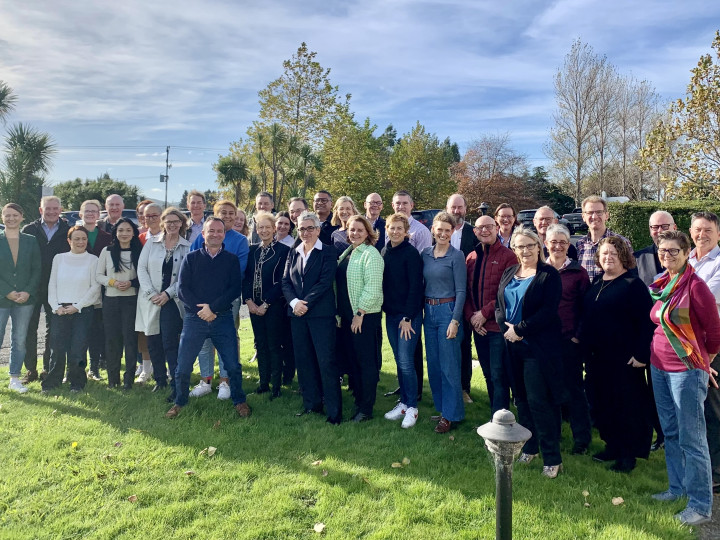
Winners, finalists and judges of the 2026 awards
The awards are made possible thanks to the generous support of our sponsors Deloitte, ANZSOG – The Australia and New Zealand School of Government, Westpac New Zealand, and DXC Technology Australia and New Zealand.
Winners of Te Tohu a te Pirimia | Prime Minister’s Award 2026 – New Zealand Infrastructure Commission's National Infrastructure Plan.
Te Tohu mō ngā Hua E Pai Ake Ana | Better Outcomes Award celebrates the achievement of significant outcomes in areas that matter most for the long-term wellbeing for New Zealanders.
The judges will be looking for initiatives that demonstrate spirit of service through:
Entries may be from a single agency or collaborative cross-agency initiatives. Cross-agency initiatives may include partners from outside the public sector.
Te Tohu Auaha Hou | Innovation Award celebrates new approaches or technologies that are creating positive change.
The judges will be looking for initiatives that demonstrate spirit of service through:
Entries may be from a single agency or collaborative cross-agency initiatives. Cross-agency initiatives may include partners from outside the public sector.
Te Tohu mō Whai Ratonga celebrates outstanding public service contributions to supporting Māori Crown relationships through auahatanga (innovation), whakapūmautanga (durability) and kōwhiringa (opportunities).
The judges are looking for initiatives that demonstrate impact for iwi, hapū, and whānau Māori through:
Entries may be from a single agency or collaborative cross-agency initiatives. Cross-agency initiatives may include partners from outside the public sector.
Te Tohu mō te Hiranga o te Mahi Kaupapa Here | Excellence in Public Policy Award celebrates outstanding public policy development.
The judges will be looking for public policy that:
Entries may be from a single agency or collaborative cross-agency initiatives. Cross-agency initiatives may include partners from outside the public sector.
Te Tohu mō te Kaiārahi Rangatahi o te Tau | The Young Leader of the Year Award celebrates inspirational young public sector leaders.
The judges will be looking for nominees who demonstrate spirit of service through:
Nominees must be aged 35 years or under as at 31 December in the year of application.
Te Tohu Rāngai Tūmatanui mō te Tumuaki o Te Tau | Public Sector Director of the Year Award celebrates outstanding public sector governance professionals.
The judges will be looking for nominees who demonstrate:
Nominees must be serving or have served on a board within the public sector for a minimum of 5 years.
Te Tohu Oranga Angitū | The Lifetime Achievement Award honours an individual who has made an exceptional contribution to New Zealand or their community and who exemplifies a spirit of service.
The recipient is selected by the Public Service Commissioner.
Te Tohu a te Pirimia | The Prime Minister’s Award for the overall winner of the year is selected from the winners of the Better Outcomes Award, Innovation Award, Whai Ratonga Māori Crown Award and Excellence in Public Policy Award.
This award is not open to nominations.
27 May – Entries due
2 July – Finalists announced
Late July – Finalists present to judging panels in Wellington
1 October – Winners announced at SOSA awards event
Check your organisation qualifies. Eligible entities include:
Decide which category best matches your initiative or individual:
We have recorded our information session on Te Hāpai Hapori | Spirit of Service Awards. Watch this short video for background and tips.
Kia ora! Thank you for watching this short presentation.
My name is Emma Smart and I’m going to give you an overview of Te Hāpai Hapori | Spirit of Service Awards and help you prepare to enter these awards.
These awards celebrate excellence in the public sector, and they recognise initiatives and individuals who deliver outstanding results for New Zealand and New Zealanders.
Why do these awards matter?
Recognition is powerful – it shows people their work is valued, it motivates engagement, and it sets a clear benchmark for excellence.
Acting with a spirit of service to the community is a fundamental characteristic of the Public Service
First up, a bit about these awards.
In 2018, the Public Service Leadership Team established the Spirit of Service Awards as a showcase event to value and recognise people and their work, to motivate public sector engagement and to set a clear benchmark for excellence.
The Public Service Commission administers these awards on behalf of the Public Service Leadership Team.
The event itself is a special evening celebrating collaboration and impact.
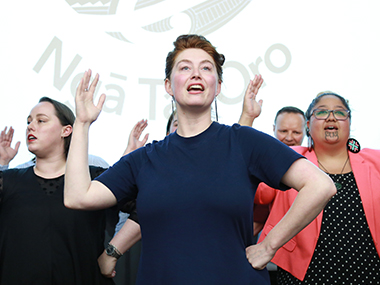
These photos are a snapshot of the event from 2024.
This list shows you which types of agencies are eligible to enter these awards.
It’s much broader than just the core Public Service. Central government departments include public service departments, departmental agencies and non-public service departments, like New Zealand Police and New Zealand Defence Force.
Crown entities are all Crown agents, Autonomous Crown Entities and Independent Crown Entities, but it doesn’t include Crown entity subsidiaries and Boards of Trustees.
If you’re unsure whether your agency is eligible, please get in touch.
Many entries are cross-agency collaborations and might include public sector or private sector collaboration.
Category winners in the past have ranged from a cross-agency collaboration with 17 partner agencies, to a small, single agency, community-led initiative. So don’t be put off if you think your initiative is too big or too small to enter.
There are four categories for initiatives, which are listed at the top here.
The names of each award give you a good indication of what the award is for. The criteria for each award are listed on our website, if you want more detail.
Te Tohu a Te Pirimia | The Prime Minister’s Award is selected from these initiatives as the overall winner each year so you can’t specifically enter for that award.
The three categories below are for individuals, listed here. Again, their names explain what they are for, and the specific details and criteria for each award are listed on our website under each award title.
These are the key dates you need to be aware of throughout the year when you are preparing entries for these awards.
Firstly, early in the year is preparation time. Agencies all have different ways of pulling together entries.
Some agencies get the comms team to support this process, (which we recommend) some are led by the chief executive’s office or the senior leadership team.
At the end of the day, entries need to be endorsed by the chief executive, so it's really important to get their backing early on.
We highly recommend getting in touch with us to talk through your ideas.
We can give you advice on how to focus your entry, whether it's the right time to enter or potentially too early in the piece, which category to consider, tips for your presentation etc.
The specific deadlines for each year are published on our website, but this timeline gives you an indication of the approximate dates.
The co-chairs of the judging panels will shortlist the finalists soon after the entry deadline, and in June we notify chief executives and agency contacts of the outcomes.
Judging is usually held in July. And finally, the awards event is held in Wellington between late August and early October.
Now let's look at how to enter.
All the links to entry forms are on our website and it looks like what you see here.
The first link is for all the initiative categories, and the other three links are entry forms for the individual categories.
There is also guidance on the website to step you through the process, that looks like what you see here.
A few tips and tricks for entering.
This is what you’ll find on the entry form for initiatives.
It is very similar for the individual awards. Under ‘Entry Details’, make sure that you have selected the category that you think best fits your initiative and if you’re not sure, please get in touch with us.
The name of the initiative that you provide here will be the name that is published if your entry is selected as a finalist.
For cross agency collaborations, please list the lead agency or agencies, and then all other agencies involved.
If you are unsure whether to include an agency as a collaborator, consider the following questions:
In this case, list the agency, and you will also need to seek endorsement from the chief executive or board chair for the entry.
This might include NGOs or private sector organisations.
This endorsement can be as simple as a one-line email from the CE or board chair saying they endorse the entry.
The contact person is the key person we would expect to liaise with if the entry is selected as a finalist.
They may be someone who led the project, or they may be a key awards contact at your agency.
On the right are the three questions you will need to answer about the initiative.
Question 1 is where you tell the ‘story’ that will convince the judging co-chairs to select your entry as a finalist.
This will also provide a good framework for your presentation, if your entry is selected as a finalist.
Use the category criteria to guide your answer to question 2 and use the definition of spirit of service to guide your answer for question 3.
So, what should you expect if your entry is selected as a finalist?
The judging co-chairs consider all the entries soon after the entry deadline and they shortlist three finalists for each category.
We notify chief executives and awards contacts of the outcomes soon after that.
Finalists are invited to present to a judging panel approximately one month later.
The judging presentations are held at Te Kawa Mataaho Public Service Commission in Wellington in July.
Each finalist presentation takes approximately one hour, and it includes a short mihi whakatau, a ten-minute presentation which is filmed, and a 15-minute Q & A with the judges, which is not filmed.
The filmed presentation is the basis of the winner’s story being told at the Awards night.
We recommend using high quality visuals (images and video) in your presentation to support telling your story.
This photo shows the judging presentation set up with the judging panel seated at the table in the foreground.
Video or PowerPoint presentations are projected to the screen at the left of this image.
For Young Leader of the Year and Public Sector Director of the Year, finalists are invited to bring support people with them.
They will often be able to provide additional insight and perspective for the judges, about the individual and the impact of their leadership.
These are some examples of finalists and winners from previous years.
This shows the breadth of types of entries from large complex multi-agency initiatives including private sector collaboration through to smaller, single agency initiatives.
Regardless of the size of the programme or initiative, the important thing is to tell the story of the impact it is having, what it is achieving and how it is delivering for New Zealand or New Zealanders.
Thank you for listening in and hopefully this gives you some ideas about how you can recognise the incredible work that people in your agency do day in, day out and how we showcase excellence across the public sector.
My final tip if you are submitting an entry: focus your entry on the impact the initiative or individual is having on New Zealanders and if you have any questions, get in touch.
We are here to help.
Kia ora.

Tumu Whakarae mō ngā Taonga | Secretary for Culture and Heritage and Chief Executive
Manatū Taonga | Ministry for Culture and Heritage
Leauanae Laulu Mac Leauanae provides strategic leadership across the culture and heritage sector to achieve strong cultural outcomes for Aotearoa New Zealand. With over 15 years’ senior leadership experience, including as Secretary for Pacific Peoples, he brings deep governance expertise and a strong commitment to public service.

Tumu Whakarae Tuarua, Ratonga Whakamana | Deputy Chief Executive Enabling Services
Public Service Commission Te Kawa Mataaho
Thor is Deputy Chief Executive of the Enabling Services group. He was previously the Deputy Commissioner System and Agency Performance, a role that gave him unique oversight of the performance of the Public Service. He has also held a number of Chief Financial Officer roles including the Ministry of Justice and Ministry for Primary Industries.
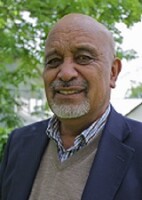
Te Whānau ā Apanui
Kaihautū mō Te Kawa Mataaho | Kaihautū to the Public Service Commissioner
Public Service Commission Te Kawa Mataaho
Rauru has a notable background serving iwi, Māori, and New Zealand through his many roles in academia, consultancy, and the Public Service. He specialises in a range of Māori related issues including environmental management, strategic planning, Treaty of Waitangi claims negotiations, policy development, and tertiary education.

Deputy Chief Executive, Policy
Te Tari o te Pirimia me te Komiti Matua | Department of the Prime Minister and Cabinet
Janine has extensive experience in environmental policy and partnerships across the public sector. As a member of the DPMC Policy Profession Board, she plays an important role in leading, managing and stewarding policy. She was previously Deputy Secretary, Natural and Built System and Climate Mitigation at Manatū mō te Taiao | Ministry for the Environment.

Deputy Chief Executive, Transformation
Te Manatū Whakahiato Ora | Ministry of Social Development
Tracy leads the Ministry of Social Development’s multi‑year transformation programme, focused on designing and delivering services for the future to better support New Zealanders. She has more than 30 years’ senior leadership experience across the public sector, with deep expertise in digital transformation, systems change, and large‑scale programme delivery. Prior to joining MSD, Tracy held senior digital leadership roles in the health and primary industries sectors.

Deputy Chief Executive, Policy, Data and Insights
Social Investment Agency | Toi Hau Tāngata
Aphra leads SIA’s central agency responsibilities and works to influence the public service to adopt social investment approaches. She has a wealth of experience from the social and justice sectors, particularly from her former senior leadership roles at Oranga Tamariki and the Ministry of Justice. She was awarded the Harkness Fellowship in 2015 and holds a Master of Laws.

Kahungunu, Rongomaiwahine
Interim Deputy Director-General, Māori Partnerships and Investment
Ministry for Primary Industries | Manatū Ahu Matua
Glenn has over 25 years’ public service experience, with a focus on Māori development and improving the Māori Crown relationship, including as a Chief Crown Negotiator working with iwi to develop and agree Treaty settlements that address historical grievances. Glenn’s previous roles include Acting Tumu Whakarae, Chief Executive of Te Arawhiti | Office of Māori Crown Relations, Director of Local Government in the Department of Internal Affairs and time at the Australian Departments of Education, Employment and Workplace Relations, and Resources, Energy and Tourism in Canberra.

General Manager – Social Transformation
Tāmaki Regeneration
Amy is an inspiring young leader whose work is transforming how Tāmaki Regeneration delivers employment and training pathways, social procurement initiatives, and affordable housing that support intergenerational wellbeing. She leads a complex socio‑economic development portfolio across employment and housing, including initiatives that support long‑term housing stability. Deeply connected to her community and guided by a strong spirit of service, Amy brings vision and a genuine commitment to helping others thrive. Amy was a 2025 finalist for Te Tohu mō te Kaiārahi Rangatahi o te Tau | Young Leader of the Year.

Programme Advisor
Waka Kotahi New Zealand Transport Agency
Alex is a thoughtful and people-centred public service leader, helping to create a more connected and user-friendly public transport system. She also supports the wider sector as co-chair of Hāpai Public New Professionals, championing collaboration among emerging public servants. Her work reflects a clear commitment to putting people at the centre of transport and public service outcomes. In 2025, she was a finalist for Te Tohu mō te Kaiārahi Rangatahi o te Tau | Young Leader of the Year.

Executive Director, Community and Economic Development
New Plymouth District Council
Damien is a trusted community leader known for uniting diverse groups to deliver practical outcomes, from strengthening local food-security networks to leading responses to homelessness. His leadership exemplifies service, innovation and a deep dedication to delivering better outcomes for communities. In 2025, Damien was the recipient of Te Tohu mō te Kaiārahi Rangatahi o te Tau | Young Leader of the Year Award.

Chief Executive
Institute of Directors
Kirsten Patterson MNZM (known as KP) is Chief Executive of the Institute of Directors New Zealand and a Chartered Member of the Institute. A qualified lawyer and Distinguished Fellow of the Human Resources Institute of New Zealand, she also chairs the Global Network of Directors Institutes and serves on the External Reporting Advisory Panel. KP is a founding member of initiatives including Champions for Change and Women in Sport Aotearoa, reflecting her strong advocacy for diversity, inclusion, and ethical leadership.

Chair
Iti Kōpara | Public Governance Aotearoa
Kevin Jenkins is Chair of Iti Kōpara | Public Governance Aotearoa and a respected leader in governance across the public, private, and not-for-profit sectors. With over 30 years of experience and current roles with NZQA, the Real Estate Institute of New Zealand, WorkSafe, Harrison Grierson, Accessible Properties NZ and the Building Research Associations of NZ, he brings deep expertise in business, innovation, and regulation. A Chartered Member of the Institute of Directors, Kevin is known for his strategic leadership and commitment to strengthening governance in Aotearoa.
We are available to assist with any queries you have regarding public service awards and recognition. We engage with key contacts at each government agency throughout the year about the awards programme.
Since 2019, Te Hāpai Hapori | Spirit of Service Awards has been recognising public servants who go the extra mile and initiatives that deliver great outcomes for New Zealand. Read more about the previous winners, finalists and judges.